Sebastian Block

Sebastian Block

Computational social scientist & social science methodologist

Postdoctoral Researcher at the University of Oldenburg

Read my workView CV

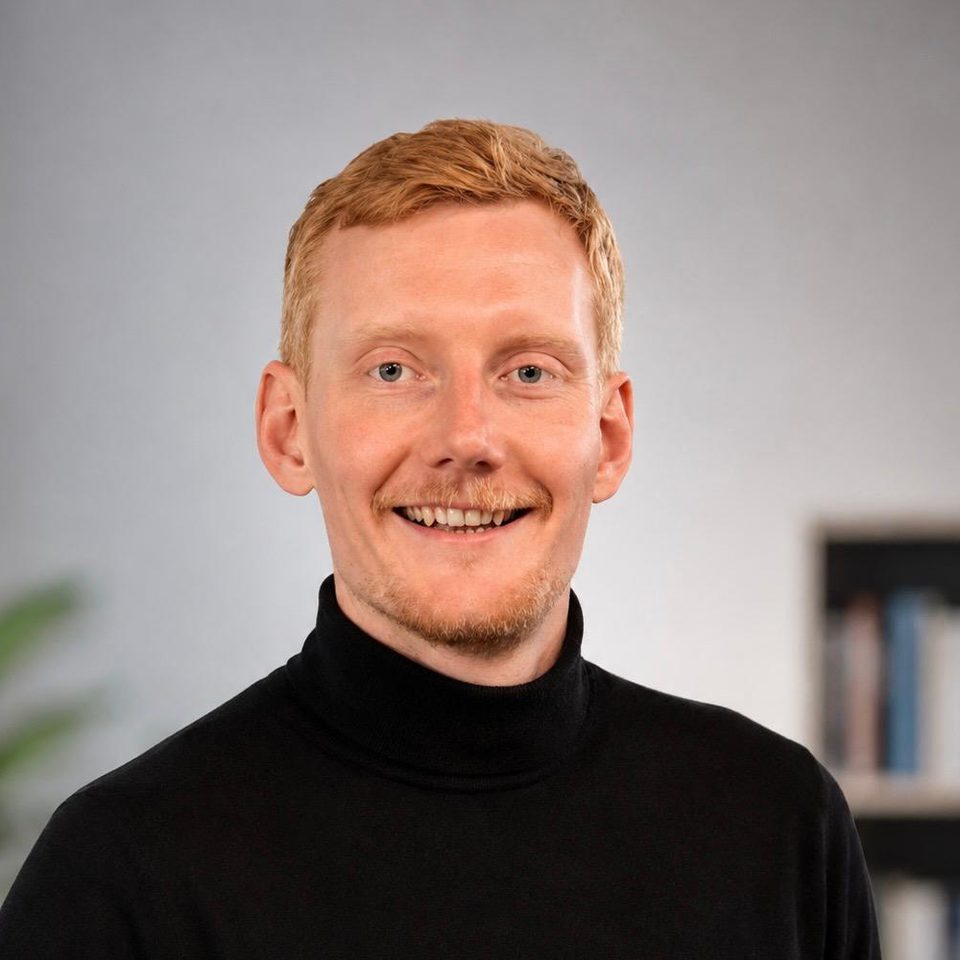
Portrait of Sebastian Block

Society, rewired by AI.

Who gains from AI, and who is left behind? I study how digitalisation and AI change who benefits and who is represented, across society and in local politics.

Unequal voices.

Inequality runs through politics and society. I study it from above and from below: whose interests politicians represent, from city councils to national parliaments, and how people perceive social change, for example in their attitudes towards AI.

Signal in the noise.

I combine computational and classical methods, from text and digital traces to surveys, to make fuzzy, complex concepts measurable.

About

I am a computational social scientist and a social science methodologist. I combine computational methods with classical empirical social research to answer questions that were out of reach before. Society is complex, and so are the concepts we use to describe it. What excites me most is making fuzzy, complex theoretical concepts measurable. Computational social science lets us measure them better and better, or, to borrow from Nate Silver, find the signal in the noise.

Substantively, I study social and political inequality. I ask whose interests are represented in politics, which social groups gain or lose from social change, and how people perceive these changes, for example in their attitudes towards AI. Digitalisation and artificial intelligence are reshaping society, and my work increasingly asks how they affect inequality. In the Booster Research Unit SCEPTIC, I study this across society as a whole. In a Hannah Arendt Fellowship that I host in 2027 together with Raf Reuse (Ghent University), I look at politics, with a focus on local politicians.

I work in the Social Stratification Group at the Institute for Social Sciences, Carl von Ossietzky University of Oldenburg.

My sole-authored articles appeared in the European Political Science Review and Government and Opposition. Co-authored articles have appeared in the European Journal of Political Research, Political Studies, West European Politics, Political Science Research and Methods and Electoral Studies, among others, and one is forthcoming in Soziale Welt.

Before joining the University of Oldenburg in April 2026, I was a postdoctoral researcher at the Chair of Computational Social Science at LMU Munich, where I covered the teaching duties of the professorship in Winter 2024/25 and Summer 2025. Earlier, I worked at Leibniz University Hannover and in a DFG project at LMU Munich, where I received my doctorate (Dr. rer. soc., summa cum laude) in 2024.

Research projects

Ongoing

SCEPTIC

Social, Computational, and Ethical Premises of Trust and Informational Cohesion

Context
Booster Research Unit at the Carl von Ossietzky University of Oldenburg, since 04/2026

Within the research unit, I study how trust in technology companies and algorithmic systems differs across social groups, and I am designing a cross-national vignette experiment on how people form judgements about artificial intelligence.

Upcoming

Generative AI among Belgian local politicians

Speech, Action, and the Machine: Generative AI Among Belgian Local Political Elites

Funding
Hannah Arendt Fellowship 2027 “Humans and AI: Perspectives from the Humanities and Social Sciences”, Göttingen Academy of Sciences and Humanities in Lower Saxony, funded by zukunft.niedersachsen, 04/2027–09/2027
People
Fellow: Raf Reuse (Ghent University). I am host and co-applicant.

Raf Reuse joins me in Oldenburg as a Hannah Arendt Fellow for six months. Together we study how local political elites in Belgium use generative AI in their political work.

Completed

Representation and Inequality in Local Politics

Funding
German Research Foundation (DFG), 2019–2022
People
Principal investigators: Martin Gross and Dominic Nyhuis. I worked on the project as a research associate (01/2020–09/2022).

The project examined whose interests are represented in the councils of large German cities. Because cities are divided into socially distinct neighbourhoods, representing a neighbourhood also means representing a social group. We built a corpus of more than 20,000 council questions from 35 large German cities, coded their topics with machine learning and mapped them to neighbourhoods. I developed the project’s human-AI approach to text classification and coordinated a team of five student assistants.

Publications

Also on Google ScholarORCID

Articles in peer-reviewed journals (12)

Forthcoming

  1. Automatic Dictionary Generation for Social Science Text Analysis: Introducing a Versatile and Transparent Approach

    S. Block, M. Harmening, D. Nyhuis

    Soziale Welt. Special Issue “Computational Social Science”

Online first

  1. Modeling Issue Competence over Time: A Bayesian Framework for Estimating Dynamic Issue Ownership

    D. Nyhuis, J.-F. Baumert, J. Choi, S. Block, M. Harmening

    Political Science Research and Methods

2026

  1. Campaign Spending in Mixed Member Proportional Systems: How Political and Institutional Context Shapes Party Strategy

    D. Nyhuis, S. Block, M. Harmening, T. Swalve

    Electoral Studies 99, 103027

  2. Incentivised Engagement: How Party Characteristics and Individual Factors Shape Politicians’ TikTok Use

    M. Huber, S. Block, T. Ruiz

    Social Media + Society 12(1), 20563051261432483

  3. Geographic Representation in Parliamentary Questions: The Benefits of Wikipedia for Automated Analyses of Legislative Text

    D. Nyhuis, S. Block, M. Harmening, M. Henneke

    The Journal of Legislative Studies 32(3), 548–560

2025

  1. Geographic Representation in Local Politics: Evidence from Parliamentary Questions in German City Councils

    M. Harmening, J.-F. Baumert, S. Block, M. Gross, D. Nyhuis, J. A. Velimsky

    European Journal of Political Research 64(4), 1999–2017

  2. The Impact of Institutional and Financial Constraints on Party Behaviour in Local Politics

    M. Gross, D. Nyhuis, S. Block, J. A. Velimsky

    Swiss Political Science Review 31(2), 287–306

  3. Legislative Oversight and Control of Independent Portfolios: Government and Opposition Dynamics

    S. Block

    Government and Opposition 60(2), 517–538

  4. The Impact of Occupational Background on Issue Representation

    J. A. Velimsky, S. Block, M. Gross, D. Nyhuis

    West European Politics 48(3), 645–668

2024

  1. Parliamentary Questions as an Intra-Coalition Control Mechanism in Mixed Regimes

    S. Block

    European Political Science Review 16(2), 298–314

  2. Electoral Campaigns and Parliamentary Practice: Do Parties Pursue the Issues They Campaigned On?

    M. Gross, D. Nyhuis, S. Block, J. A. Velimsky

    Swiss Political Science Review 30(2), 89–107

  3. Probing the Effect of Candidate Localness in Low-Information Elections: Evidence from the German Local Level

    J. A. Velimsky, S. Block, M. Gross, D. Nyhuis

    Political Studies 72(3), 1090–1111

Other publications

2026

  1. Simplifying Sociology: When Complex Writing Occurs, Where It Matters, and How It Can Be Improved

    C. Schwemmer, S. Block, S. Jaworeck, M. Holz, P. Spielbauer

    SocArXiv

2024

  1. Classifying Documents with Human-AI-Collaboration: Introducing the Human-AI Collaboration in Classification Utility Framework

    S. Block, D. Nyhuis, M. Gross, M. Harmening, J. A. Velimsky

    OSF Preprints

  2. Computational Science Methods in Social Science Research: Exploring Novel Dataset Creation Approaches and Innovative Empirical Measurements for Text-as-Data Research

    S. Block

    Doctoral dissertation, LMU Munich

2022

  1. Die Kommunalwahlen in Nordrhein-Westfalen im September 2020: Starke Grüne und weiterer Absturz der SPD im Zeichen der Covid-19-Pandemie [The 2020 local elections in North Rhine-Westphalia]

    D. Nyhuis, J. A. Velimsky, S. Block, M. Gross

    Zeitschrift für Parlamentsfragen 53(1), 120–134

2021

  1. Ein zunehmend bunter Freistaat: Die Analyse der bayerischen Kommunalwahlen im März 2020 unter besonderer Berücksichtigung der kreisfreien Städte [The 2020 Bavarian local elections]

    J. Pollex, S. Block, M. Gross, D. Nyhuis, J. A. Velimsky

    Zeitschrift für Parlamentsfragen 52(1), 78–94

Software

  1. ADGA: Automatic Dictionary Generation Approach for Text Analysis

    S. Block, M. Harmening, D. Nyhuis

    R package accompanying the forthcoming article in Soziale Welt.

Teaching

Computational social science

  • Introduction to Computational Social Science

    Lecture, BA module “Fields of Sociology”, LMU Munich, Winter 2024/25, Summer 2025

Research methods

Computational methods

  • Quantitative Text Analysis for the Social Sciences

    Seminar, MA module “Advanced Methods of Inequality Research”, LMU Munich, Summer 2025

  • Introduction to Data Scraping

    Seminar, MA module “Data Collection”, LMU Munich, Winter 2024/25

  • Computational Social Science and the Analysis of Political Texts

    Seminar, BA and MA modules “Political Science Research Methods”, Leibniz University Hannover, Summer 2024

  • Automatic Text Analysis

    Seminar, BA and MA modules “Political Science Research Methods”, Leibniz University Hannover, Summer 2023

Empirical social research methods

  • Qualitative Content Analysis

    Seminar, BA and MA modules “Political Science Research Methods”, Leibniz University Hannover, Summer 2024

  • Manual Quantitative Text Analysis

    Seminar, BA and MA modules “Political Science Research Methods”, Leibniz University Hannover, Winter 2023/24

  • Quantitative Content Analysis

    Seminar, BA and MA modules “Political Science Research Methods”, Leibniz University Hannover, Winter 2022/23

Political representation and participation

  • Parliamentary Representation and Political Participation in International Comparison

    Seminar, BA module “Introduction to Comparative Politics”, LMU Munich, Summer 2022

  • Participation and Representation

    Seminar, BA module “Introduction to the German Political System”, LMU Munich, Winter 2021/22

  • Participation and Representation in Empirical Comparison

    Seminar, BA module “Introduction to Comparative Politics”, LMU Munich, Summer 2021

Workshops and invited talks

  • Data Scraping with Python

    Workshop, German Institute for International and Security Affairs (SWP), Berlin, 25 November 2025

  • Data scraping: what it is and why it matters for the social sciences and policy advice

    Invited talk (in German), German Institute for International and Security Affairs (SWP), Berlin, 24 November 2025

Supervision

  • Supervised four BA and three MA theses (first or second supervisor)

    Leibniz University Hannover, 2022–2024

Get in touch.

sebastian.block [at] uni-oldenburg.de

Dr. Sebastian Block
Social Stratification Group
Institute for Social Sciences
Carl von Ossietzky University of Oldenburg
Ammerländer Heerstr. 114–118
26129 Oldenburg, Germany